
Secondary school
Basic experiential teaching in the subject
German


.png)




FOLDER OVERVIEW
Die Rechnung kommt separat und landet teilweise im Spamordner.


Secondary school
Impressions from the basic experience lessons in the subject
German / Language and Communication: Topic Goethe
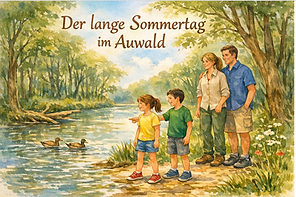
Herzlich willkommen zu unserer besonderen Mitmach-Geschichten.
Die Mittmach-Geschichten sind zumeist als PowerPoint-Datei gespeichert und können individuell bearbeitet sowie an die Bedürfnisse der Schülerinnen und Schüler angepasst werden. Die Bilder können während der Erzählung über eine digitale Tafel oder einen Beamer gezeigt werden und unterstützen das gemeinsame Erleben der Geschichte.
Die speziell für Schüler:innen mit komplexen Beeinträchtigungen
entwickelt wurde. Diese Geschichte lädt nicht nur zum Zuhören ein, sondern
ermutigt alle Beteiligten auch zur aktiven Mitgestaltung durch Geräusche, Laute und einfache, kurze Spielszenen.
Während wir die Geschichte gemeinsam erleben, werden die Schüler:innen
aufgefordert, einfache Geräusche mit Unterstützung zu erzeugen. Diese Laute können durch Klatschen, Rufen, Materialien oder über einen BIGmack ausgelöst werden.
Solche interaktiven Elemente fördern das Gemeinschaftsgefühl und die Freude am Geschichtenerzählen.
Die vorliegende Geschichte eignet sich hervorragend für Feiern in Schulen oder anderen sozialen Einrichtungen. Sie bietet eine aufregende Möglichkeit, die festliche Stimmung zu genießen, und gleichzeitig die Kreativität und das Miteinander zu stärken.
Wir wünschen Ihnen und den teilnehmenden Schüler:innen viel Freude beim Vorlesen und Erzeugen der Geräusche.
Für die Gestaltung von Mitmachgeschichten empfehle ich folgende Alternativen:
Eine Möglichkeit besteht darin, die Geschichten in einem Fotobuch zu präsentieren, was eine ansprechende
Option darstellt.
Wenn Ihnen eine kostengünstigere Lösung vorschwebt, könnten Sie die Seiten nach dem Drucken laminieren. Dies sorgt nicht nur für einen besseren Schutz, sondern erleichtert auch die Nutzung der Geschichte durch Schüler: innen. Anschließend können die laminierten Blätter mit einem Spiralbindegerät gebunden werden, um eine handliche und praktische Erzählform zu schaffen.


Ringbindung
Fotobuch
Basic experiential teaching in the subject Language and communication
Narrative perspective:
The protagonist of the stories is a puppet named Hans. He serves as a recognizable symbol for the basic experiential German lessons. He guides the students through the individual stories.
As described in the introduction, the individual stories consist of building blocks or serve as a resource for ideas. The individual blocks can be used flexibly, meaning they can be modified depending on the time and student population.
Important! The stories are not read aloud, but told freely. The only important thing is that the story serves as a framework for the mood.
Structure of the story
The stories are each structured in such a way that they usually begin and end with a film about the theme of the poem, such as spring, summer or a particular landscape.
The focus is on the story or poem, which is experienced in a basic way, section by section or verse by verse. Specific suggestions are provided for each. A corresponding analogue activity is offered before or after the story/poem.
tragedy
The stories/lessons are each structured in such a way that they usually begin and end with a film about the protagonist.
The stories are accompanied by film clips that vividly illustrate the events. Analogue activities take place within the stories that accompany and enrich the events, or even create the props.
Useful tools.
The coat racks used in the stories, perhaps supplemented with matching cloths, support the design of a wide variety of scenarios by "representing" spaces. They represent the castle, the church, the horse, etc. The coat racks can also be used as doors that open and close.
BIGmacks are also frequently used. Texts are spoken on them, which are used as lines of poetry or as dialogue in a tragedy. Students' communication devices can be incorporated into the story. This makes the connection with the students even more intense!
Referring to the excerpt from the NRW teaching guidelines for the subject area of language and communication, it is important that students experience literary texts at a "basic level." See the description at the end of the page.
*1)Teaching guidelines for the differentiated Intellectual Development program at all learning locations in North Rhine-Westphalia, Language and Communication. See description at the bottom of the page.